




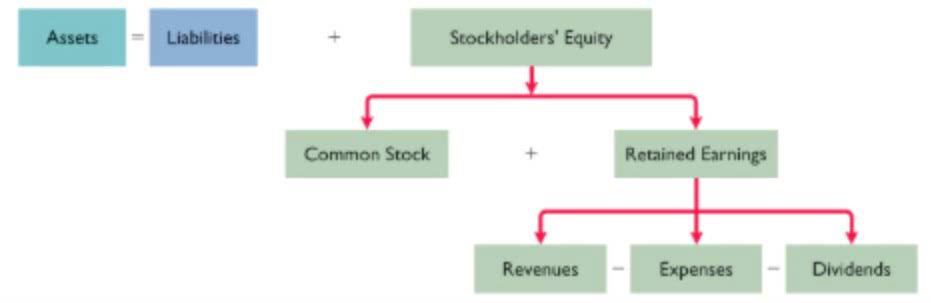
The accounts may receive numbers using the system presented in (Figure). The expanded accounting equation allows us to identify the impact on the owner’s equity in detail. For instance, such as equity increasing due to revenues and expenses causing a reduction. The equation is also important as it helps accountants Accounting Periods and Methods accurately determine the effect of a specific transaction with owners. Stated more technically, retained earnings are acompany’s cumulative earnings since the creation of the companyminus any dividends that it has declared or paid since itscreation.
How Do Revenues Affect the Expanded Accounting Equation?
(Note that, as above, the adjustment to the inventory and cost of sales figures may be made at the year-end through an adjustment to the closing stock but has been illustrated below for completeness). The inventory (asset) of the business will increase by the $2,500 cost of the inventory and a trade payable (liability) will be recorded to represent the amount now owed to the supplier. The equation remains balanced because the increase in assets (cash) is offset by the increase in owner’s equity (owner’s capital).
Corporation Transaction C8.

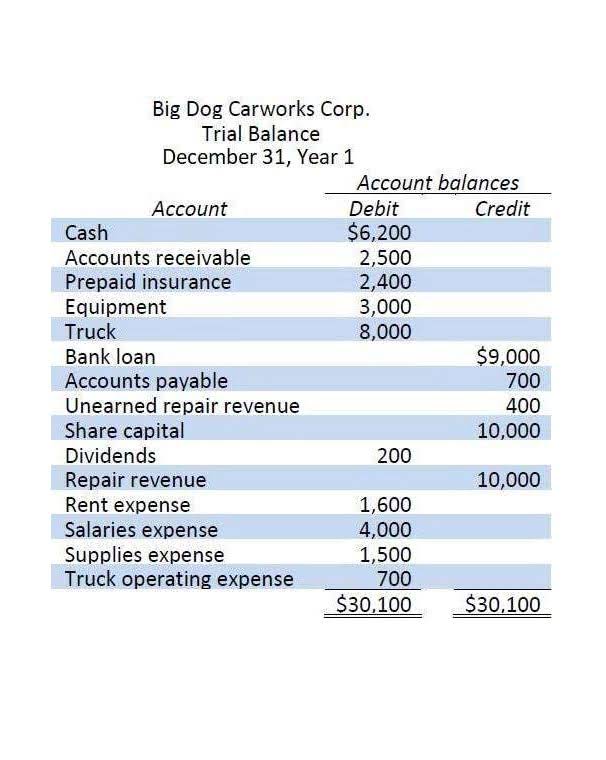
As you can see with this example, the basic accounting equation remains balanced although we’ve split the stockholders’ equity into its components. The beginning retained earnings is a measure of the stockholders’ equity at the beginning of the calculation period so the impact of contributed capital, dividends, revenue, and expenses can be measured. If the accounting equation is unbalanced, debits don’t equal credits in the trial balance, and any expanded accounting equation financial statements generated would be unreliable and inaccurate. Even if the trial balance total debits and credits are equal, as the accounting equation requires, missing transactions may make the financial statements used for financial reporting incomplete and incorrect. The accounting equation uses total assets, total liabilities, and total equity in the calculation. This formula differs from working capital, based on current assets and current liabilities.
Example of Expanded Accounting Equation
- Owner’s capital can be characterized through the initial investment of the owner, partners and shareholders who are directly involved in the interest of the organization.
- Learn about the expanded accounting equation in finance, its definition, formula, and how it works.
- The yield of this equation reveals how operational activities and shareholder decisions directly influence the equity section.
- The receipt of money from the bank loan is not revenue since ASI did not earn the money by providing services, investing, etc.
Assets are typically categorized as either current, if they can be converted to cash within a year, or non-current, for longer-term resources. The fundamental accounting equation is debatably the foundation of all accounting, specifically the double-entry accounting system and the balance sheet. Double-entry accounting is the concept that every transaction will affect both sides of the accounting equation Mental Health Billing equally, and the equation will stay balanced at all times. Substituting for the appropriate terms of the expanded accounting equation, these figures add up to the total declared assets for Apple, Inc., which are worth $329,840 million U.S. dollars.
The accounting equation focuses on your balance sheet, which is a historical summary of your company, what you own, and what you owe. A corporation’s own stock that has been repurchased from stockholders. Also a stockholders’ equity account that usually reports the cost of the stock that has been repurchased.

- We also show how the same transaction will be recorded in the company’s general ledger accounts.
- The accounting equation also indicates that the company’s creditors had a claim of $7,120 and the owner had a residual claim of $10,080.
- The balance sheet is a reflection of the basic accounting equation.
- An account is a contra account if its normal balance is opposite of the normal balance of the category to which it belongs.
- These equity relationships are conveyed by expanding the accounting equation to include debits and credits in double-entry form.
- The revenues and expenses show the change in net income from period to period.
- It represents the relationship between the assets, liabilities, and owners equity of a person or business.This is also known as the Accounting Equation or The Balance Sheet Equation.
The difference here is that a note typically includes interest and specific contract terms, and the amount may be due in more than one accounting period. Insurance, for example, is usually purchased for more than one month at a time (six months typically). The company does not use all six months of the insurance at once, it uses it one month at a time.